Biophilic Beyond the Potted Plant: Designing Interiors That Age With Their Materials
For readers assessing biophilic interior design, the practical question is how the idea performs in a real room, not only how it photographs. The 11th edition of Dubai Design Week ran from 4 to 9 November 2025 across Dubai Design District, with Downtown Design on the d3 Waterfront Terrace from 5 to 9 November. Two words dominated that floor: biophilic, and materials. The showroom version of biophilic is a fig tree in the corner and a green wall by the lift. The floor version was travertine, unlacquered metal, oak and heavy linen, surfaces chosen for what they do over ten years rather than how they photograph on handover day.
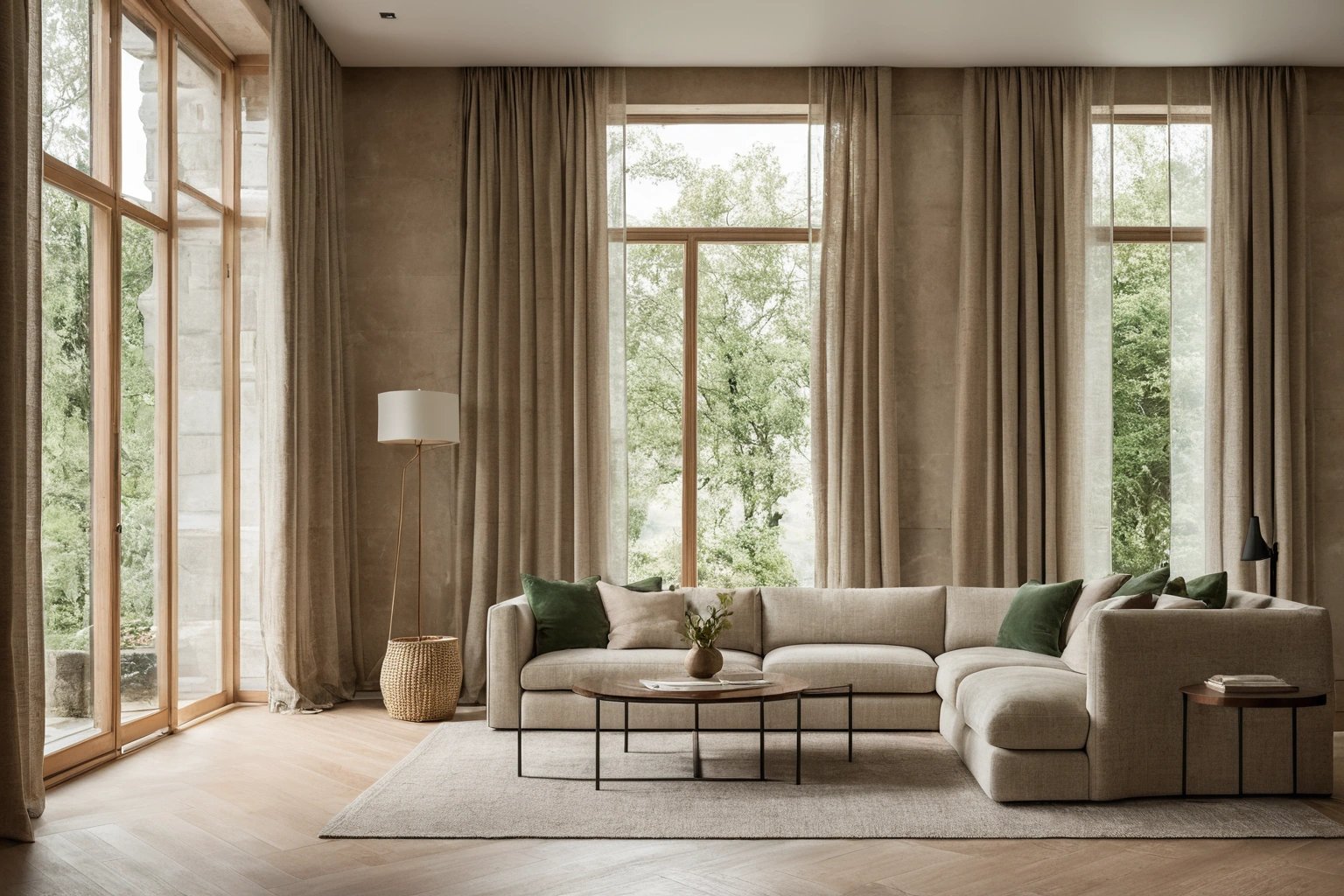
What the research says, and what it does not
Biophilic design has a real literature behind it, unusual for an interiors trend. The biologist Edward O. Wilson popularised the word in Biophilia (Harvard University Press, 1984), describing an innate tendency to focus on life and lifelike processes. That same year Roger Ulrich published a paper in Science that remains the most quoted thing anyone says about nature and buildings, usually inaccurately.
Ulrich read the records of a 200-bed suburban Pennsylvania hospital from 1972 to 1981, taking patients recovering from cholecystectomy, a standardised gallbladder operation. He kept only surgeries between 1 May and 20 October, because that is when the trees outside had leaves. The rooms were near enough identical; some windows faced a small stand of deciduous trees, the rest a brown brick wall. Matched into 23 pairs, 46 patients in total, the tree-view group went home in 7.96 days against 8.70, drew 1.13 negative comments per patient in the nurses' notes against 3.96, and on recovery days two to five took fewer strong painkillers, reaching for aspirin and paracetamol where the wall-view group took narcotics.
The result is genuine and smaller than its reputation. Ulrich said so himself: his built view was "a comparatively monotonous one, a largely featureless brick wall", and the conclusions "cannot be extended to all built views". Forty-six patients in one wing is a finding, not a law of nature. Stephen and Rachel Kaplan's attention restoration theory, from The Experience of Nature (Cambridge University Press, 1989), supplies the mechanism: directed attention is effortful and it tires, while soft fascination, the gentle involuntary looking that leaves and moving water invite, lets it recover. Both stop at the same place. The evidence is about views, light and contact with living things. None of it is about oak. Anyone citing a hospital study to sell a stone slab is misusing it, and the case for materials that age has to be made on other grounds. A related practical reference is available in Material Selection.
Fourteen patterns, and where the plant sits
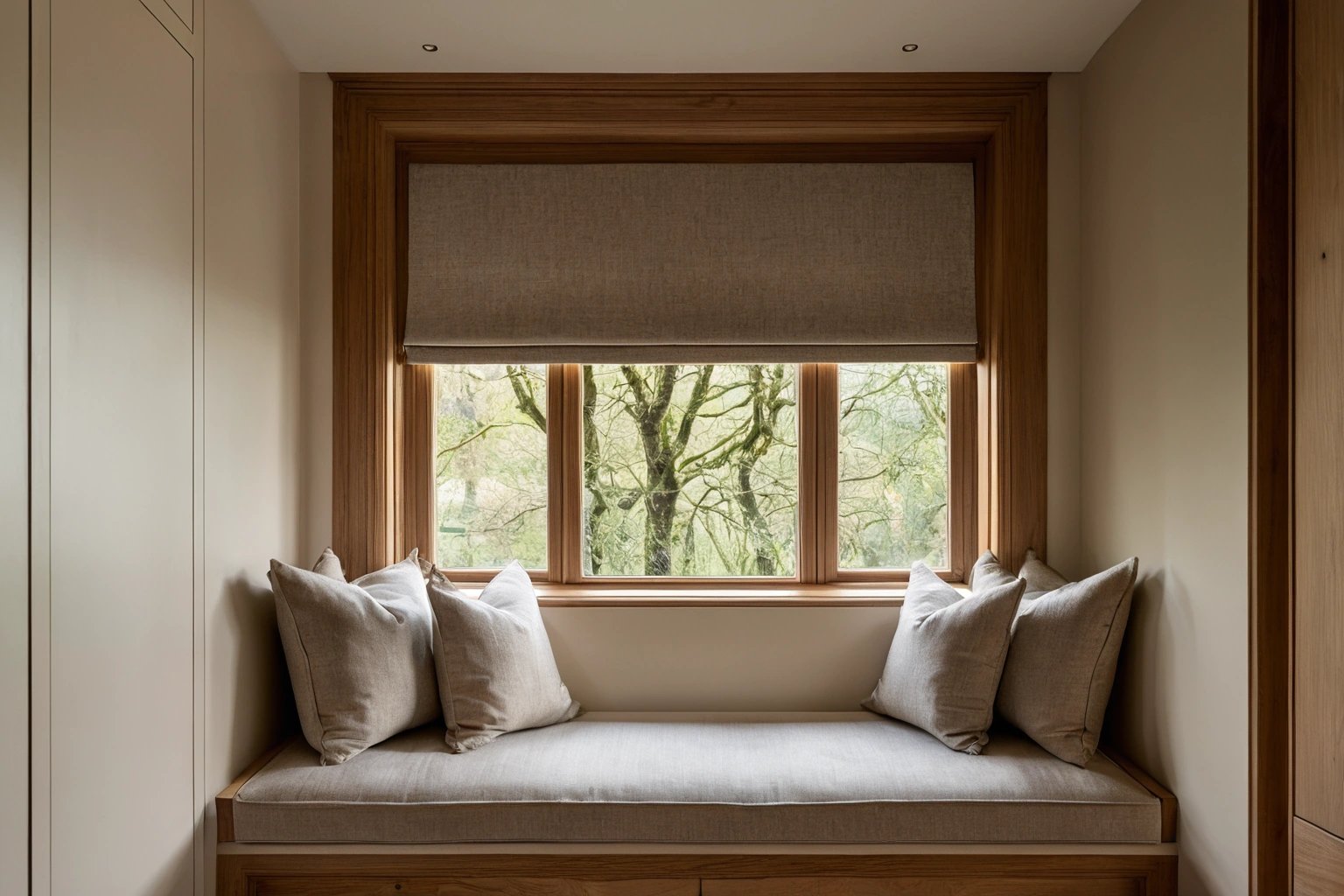
The field's standard framework is 14 Patterns of Biophilic Design, published by Terrapin Bright Green in 2014 and reissued in 2024 with a fifteenth pattern, Awe. The potted plant belongs to one pattern out of fourteen, the first, Visual Connection with Nature. The other thirteen are the ones nobody buys. Pattern six is Dynamic and Diffused Light, a rhythm rather than a level, the thing a uniform ceiling grid deletes. Patterns eleven and twelve, Prospect and Refuge, are why a window seat with a long view and a solid back works on people who cannot say why.
Pattern nine matters most here. Material Connection to Nature means "material and elements from nature that, through minimal processing, reflect the local ecology or geology". The load-bearing phrase is minimal processing. A material sealed, filmed and colour-matched has been processed out of the pattern. It may look like stone. It no longer behaves like stone. This decision can also be compared with the site's guide to Lighting Design.
A synthetic surface is engineered to arrive perfect and defend that condition until it fails. A natural one arrives unfinished and spends thirty years getting somewhere. Only one of those is a life cycle you can watch.
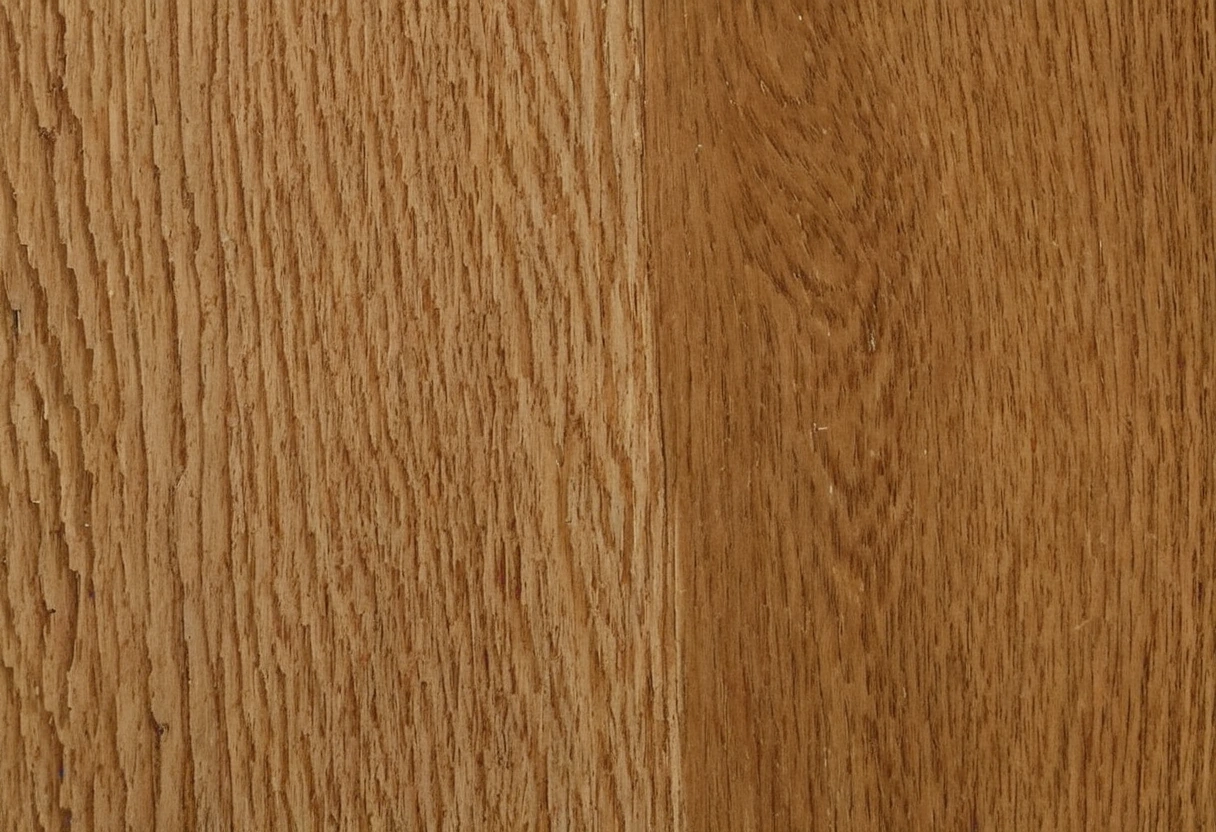
What use does to five materials
Patina is a specific word, not a mood. It covers the thin layer forming on copper, brass and bronze through oxidation, and the sheen that age, wear and polishing give stone and wood. On copper alloys it is a mix of copper chlorides, sulfides, sulfates and carbonates, depending on what is in the air. It is a record of contact.
| Material | What changes | What drives it | What stops it |
|---|---|---|---|
| Oak | Colour deepens; handled edges take a polish | Tannins oxidising, daylight, waxing, hands | Heavy film finishes that seal the surface off |
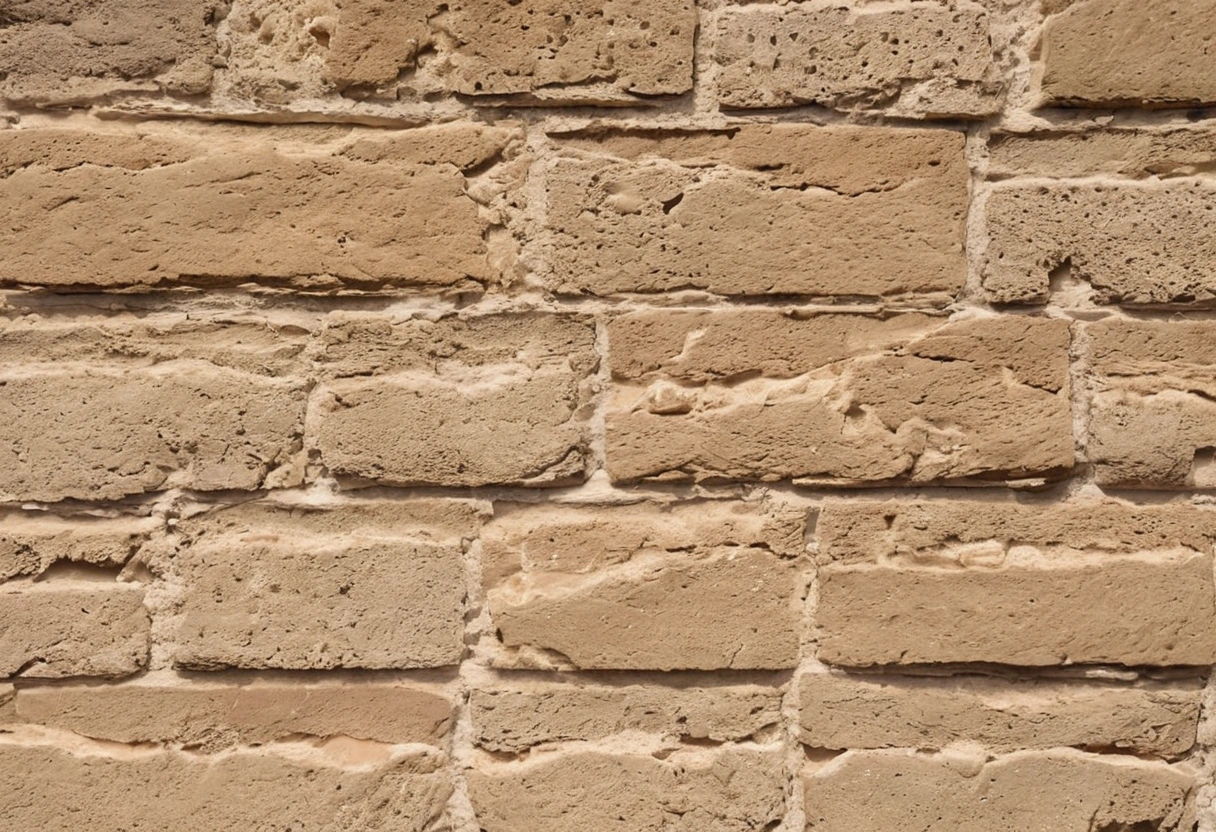
| Travertine | Pores soften and fill; arrises round over | Traffic, cleaning, contact with weak acids | Epoxy fill plus a high polish, which freezes it |
| Unlacquered brass | Browns overall, stays bright where hands land | Copper meeting oxygen, moisture, sulphur compounds, skin oils | Lacquer, a barrier against that precise reaction |
| Leather | Darkens, softens, creases along the lines it bends | Oils, daylight, body heat, repeated handling | Pigmented coatings sitting on top of the grain |
| Linen | Softens with every wash | Flax fibre relaxing in use | Resin finishes sold as crease resistance |
The fourth column is where schemes fail: the right material bought, then given a finish whose whole job is to stop it being itself. Lacquered brass holds the catalogue photograph for a few years, wears through where hands touch, then patinates underneath in patches. Unlacquered, the same handle browns evenly and stays bright exactly where it is held. Further examples and planning context appear in Wall Finishes.

Travertine makes the geological version of the argument. It is a freshwater limestone laid down around mineral springs, precipitated as calcium carbonate from groundwater carrying dissolved carbon dioxide; its pores and banding record water temperature and flow when each layer formed. The Colosseum is the largest building in the world made mostly of travertine, which tells you what the stone does across two millennia unprotected.
Vocabulary worth having before you specify
- Wabi-sabi
- The Japanese aesthetic centred on the imperfect, impermanent and incomplete; sabi carries the sense of rustic patina. Its repair practice, kintsugi, mends a broken bowl in gold rather than hiding the break.
- Prospect
- Terrapin's eleventh pattern: an unblocked view over a distance, for surveillance and planning.
- Refuge
- The twelfth: a place to withdraw to, protected from behind and overhead.
Specifying a room that is allowed to change
- Design the light as a rhythm, not a level. Bright and dim across a day, moving shadow, daylight on two orientations.
- Give every seat a prospect and a refuge. A long view out, something solid behind the head. Two patterns, one chair.
- Interrogate the finish, not the material. The material is rarely the mistake. The finish usually is.
- Put the ageing materials where hands go. Patina needs contact; a patinating surface out of reach just gets dusty.
The questions to ask
The useful questions are about the next decade, not the handover photograph. A workshop building interiors in solid timber and natural stone should answer all of them plainly. For the next stage of the brief, see Space Planning.
- Is this solid or veneer over board, and can the surface be worked back in fifteen years?
- What is the finish, and does it sit on the surface or soak into it?
- Is the metalwork lacquered, and can I have it unlacquered?
- How is the stone filled, and what happens to it under an acidic cleaner?
- Which parts are meant to change, and what does your maintenance advice say to leave alone?
The plant is not the problem. It is pattern one, and it will be dead in a year unless somebody waters it. The problem is that it became the whole idea, and the whole idea was always harder: get the light moving, get the view out, give people somewhere to sit with their back covered, and choose surfaces permitted to record the years rather than resist them. A room built that way does not peak on handover day. It starts there.